Work Package II
Achilles Tendon Regeneration
Achilles tendinopathy (AT) is the most common tendon disorder of the lower extremities, affecting up to 6% of the general population and up to 50% of elite athletes. Most attempts to improve treatment approaches fail due to an incomplete understanding of the underlying molecular and cellular mechanisms.
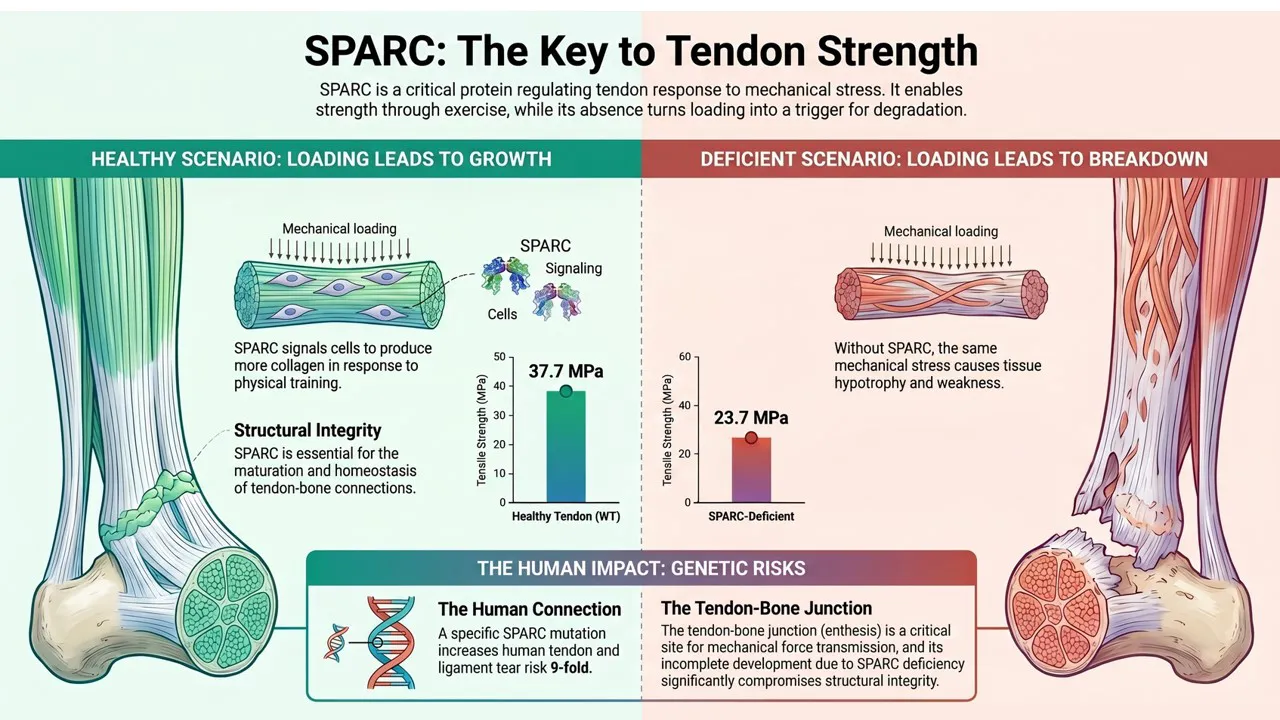
We recently identified SPARC (Secreted Protein Acidic Rich in Cysteine) as a key protein of the extracellular matrix in tendons. It plays a crucial role in tendon mechanobiology and is essential for tissue maturation, tendon homeostasis, and the development of the tendon insertion. We demonstrated that, in the absence of SPARC, mechanical loading of tendons in the early postnatal stage leads to tissue hypotrophy and incomplete development of the Achilles tendon enthesis (Figure). Additionally, we identified a previously unknown SPARC mutation in patients with tendon and ligament injuries.
To further investigate the role of SPARC, we have now developed an improved, tendon-specific SPARC knockout (KO) mouse model (coSPARC-/-) that exhibits not only a generalized tendinopathy phenotype but also incomplete maturationand progressive degeneration of the Achilles tendon enthesis. This model provides an excellent basis for investigating the degenerative pathology of the enthesis.